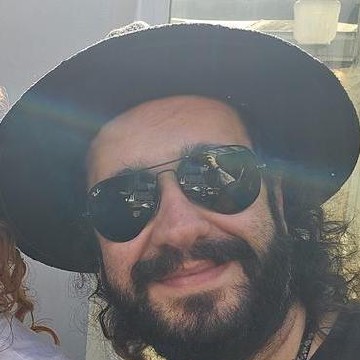
I am Mateus
Delivery lead, architect and developer. São Paulo, Brazil.
Welcome to my portfolio. Here you’ll find information about myself, my projects, my work, and anything else you may wonder about.
Some background history
I was born in 1983 in the largest city in Brazil, and it wasn’t long before I found my love for computers and code. When I was 13, in 1996, I started learning programming. The Linux project had just started and I had the luck of finding a copy of Slackware 3.1 with a friend of mine. It was with that Slackware that I started learning ANSI C, writing small programs to solve my mathematics homework. And since I had them, why not sell them to my friends? That’s how I learned about cross compiling — and how to make some extra bucks.
When the internet arrived, that’s when my world really opened up. With the internet came IRC, with IRC came a lot of chatting, and while chatting on the right channels I learned some Assembly. The real question is “why Assembly?” Basically for two reasons:
- I know how to program, but what really happens on the inside?
- How do I write a shellcode and exploit my own mistakes?
Needless to say, it was a hell of a fun time.
Then 2002 came, and with it university. I studied Computer Science at Universidade Presbiteriana Mackenzie, where I learned a hell of a lot about computers, networks, project management, love, life, and so on. That was also when I started working for real, at small and large companies. I started at Mackenzie itself, then went to Accenture as an intern, then back to Mackenzie, then to a startup named Ouvi (which did marketing on mobile phones, before iPhones), then to an engineering company named Método, and finally to Deloitte.
At all those companies I polished my skills in:
- Networks and infrastructure
- Game programming (no SDK, just Ogre, SDL, and a lot of C++)
- Bluetooth programming
- JME
- Database modelling
- Oracle database administration
- Oracle EBS
- Machine learning
- RPA
- Python
- …
It was also at those companies that I found a passion I still hold: studying complex autonomous systems, focused on genetic algorithms and optimisation problems. That led me back to Mackenzie, to a master’s degree in the artificial intelligence and evolutionary systems line. In 2011 I presented my work at CEC in New Orleans, and in 2012 I finished the degree. Finishing it also started a new part of my life: that was when I got married. And that, that’s another story.
Passions
I do love other things that are not related to IT — only a few, but these passions I definitely have:
- Music: I simply love blues, jazz, heavy metal and plain old rock and roll. I’m always listening to something while I work.
- Arts: yes, I know, “arts” is too generic. Basically I like to draw, with John Buscema as my main inspiration. It’s been a long time since I drew anything, but that’s mainly down to lack of time — whatever does come out ends up on @kronos.art.
- Motorcycles: what can I say? I love old bikes! I currently own a Royal Enfield, and I’m simply in love with it.
I always try to mix work with a bit of pleasure through those three passions. For instance, I’m always listening to something, and I ride my motorcycle every single day I have to go to the office. And drawing is what I use to unwind.